The Future of Intelligent Invoice Automation

Jasper Blok - SAP Invoice Management / Workflow Consultant
The business landscape is changing rapidly. As a result, the design and implementation of financial and document-based workflows are also undergoing fundamental changes.
During the OpenText™ VIM Partner Deep Dive 2026, which took place on June 9 and 10, 2026, in Grasbrunn, market leaders, SAP consultants, and technology partners came together to discuss the latest developments in Vendor Invoice Management (VIM).
Four strategic pillars took center stage: Productivity, Innovation, Integration, and Security. The key message was clear: organizations do not need to postpone their automation goals. By taking advantage of the available opportunities, organizations can make the most of these four pillars.
The transition from traditional, static workflow routing to an advanced and flexible ecosystem was discussed in detail. Generative AI, side-by-side extensibility, and SAP S/4HANA Clean Core compliance are playing an increasingly important role in this transition.
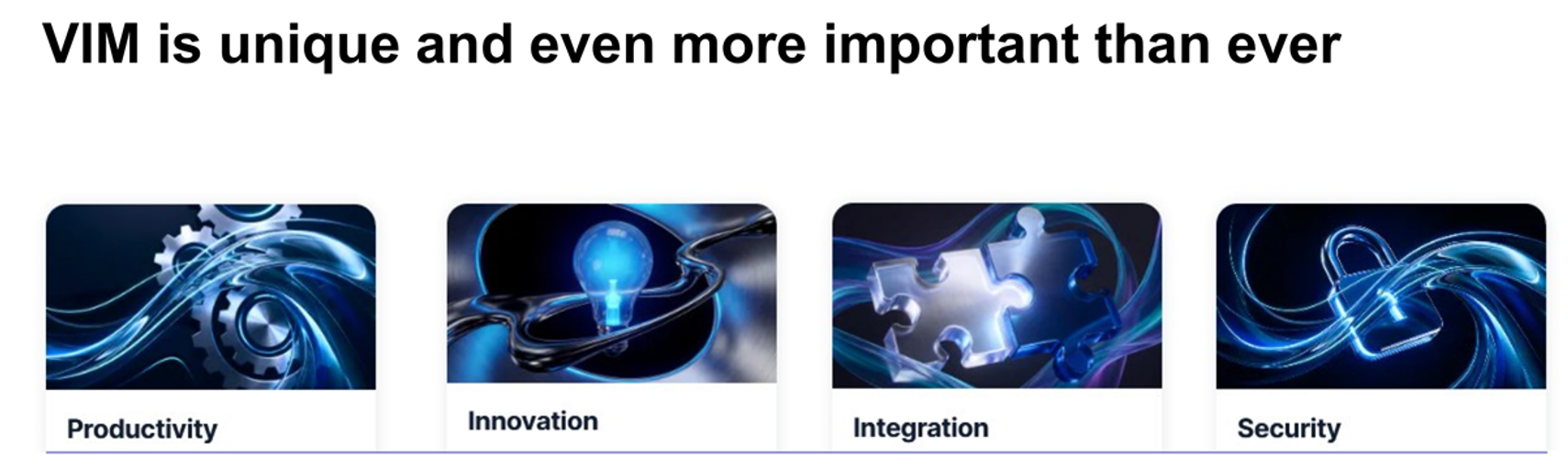
Figure 1: Theme of the Deep Dive 2026
This blog highlights the most important developments and real-world examples:
The AI Shift: From Assisted AI to Agentic Orchestration
Getting the Most Out of OpenText Support
ESG Intelligence: From Operational Data to Sustainability Information
Premium User Experience: Introducing VIM OneInvoice
E-invoices
Transportation Management (TM) Invoices
Beyond Invoices
1. The AI Shift: From Assisted AI to Agentic Orchestration
During his keynote, Mudit Bhatnagar highlighted the evolution of artificial intelligence at VIM. VIM is moving from simple “Assisted AI” models toward a fully-fledged “Agentic Ecosystem” (an ecosystem of autonomous AI agents).
One example of this shift is that Capture for SAP is equipped with generative AI functionality to improve invoice recognition and processing. This is just a preview of this timely topic. My colleague Martin Nooteboom will explore this in greater depth in an upcoming blog post.
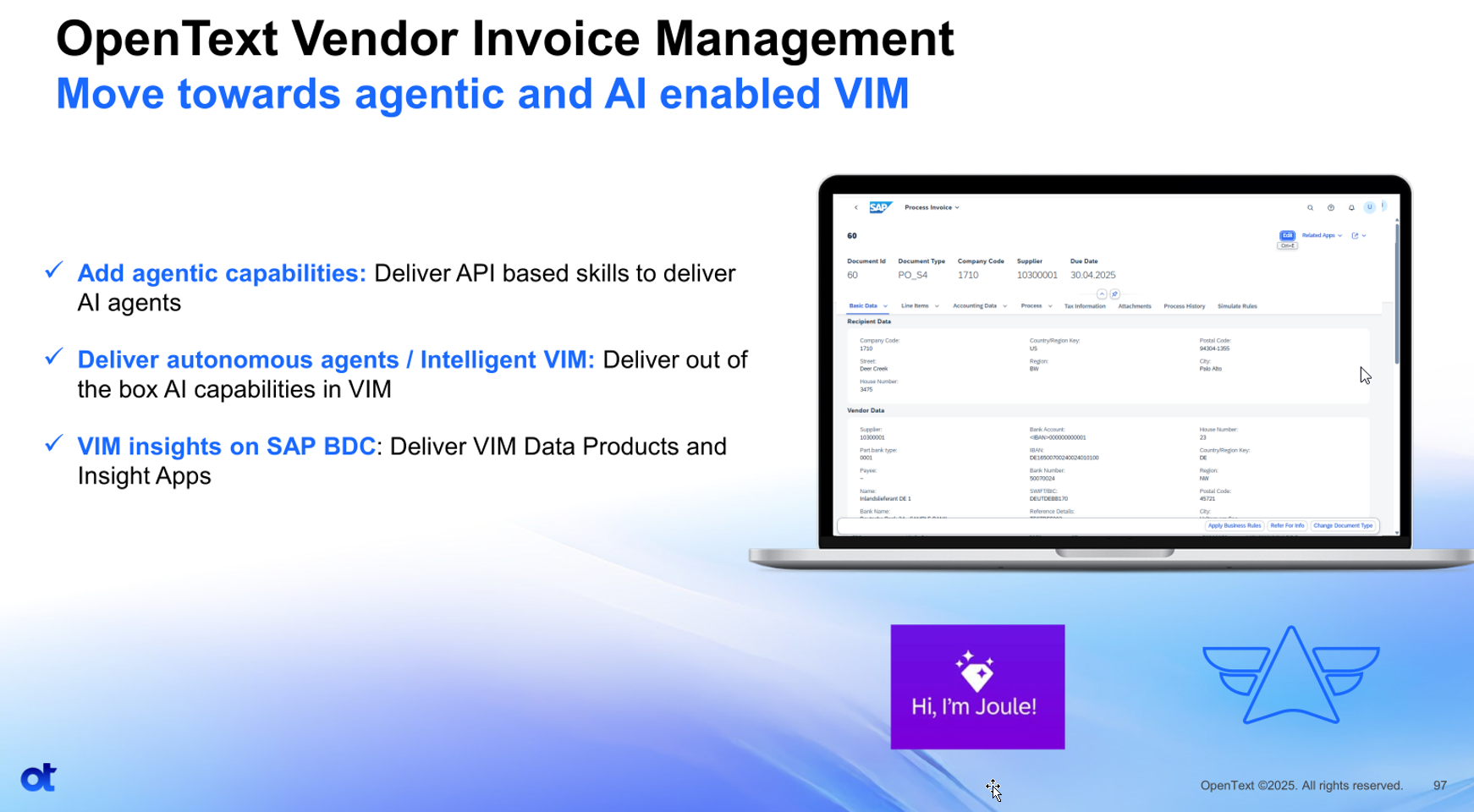
Figure 2: AI and VIM
2. Making the Most of OpenText Support
During the Deep Dive, Roman Rogatsev, Technical Support Manager at OpenText, shared practical strategies for making the most of collaboration with the various VIM & Capture EMEA support teams.
An important point to consider here is the distinction between:
Support Case: for actual system errors, software issues, and missing or incorrect documentation.
Consulting Request: for questions regarding user setup, process design, configuration, and training.
When critical issues in VIM require immediate escalation or expedited processing of an OSS ticket, organizations can use the SAP Customer Interaction Center (CIC) and consult the relevant SAP Notes. These explain how to provide a clear description of the business impact, specifying the What, How, When, and Who of the issue.
Relevant SAP Notes:
SAP Note 560499 – Customer Interaction Center: Hotline – Chat – Online Form: https://me.sap.com/notes/560499/E
SAP Note 1281633 – Speed up the processing of a support case: https://me.sap.com/notes/1281633
3. ESG Intelligence: From Operational Data to Sustainability Information
ESG stands for Environmental, Social, and Governance and serves as the framework used to evaluate companies in terms of sustainability, social responsibility, and good governance.
The growing number of regulations surrounding ESG reporting means that organizations have an increasing need for reliable and efficient ways to collect sustainability information.
Figure 3: The Importance of ESG
During the partner presentation titled “Turning Operational Data into ESG Intelligence with SAP Invoice Management by OpenText,” it was explained how existing techniques can be used to extract relevant ESG data from, for example, utility and waste management invoices. By integrating machine learning and business rules, data from complex invoices in various languages and formats can be processed automatically.
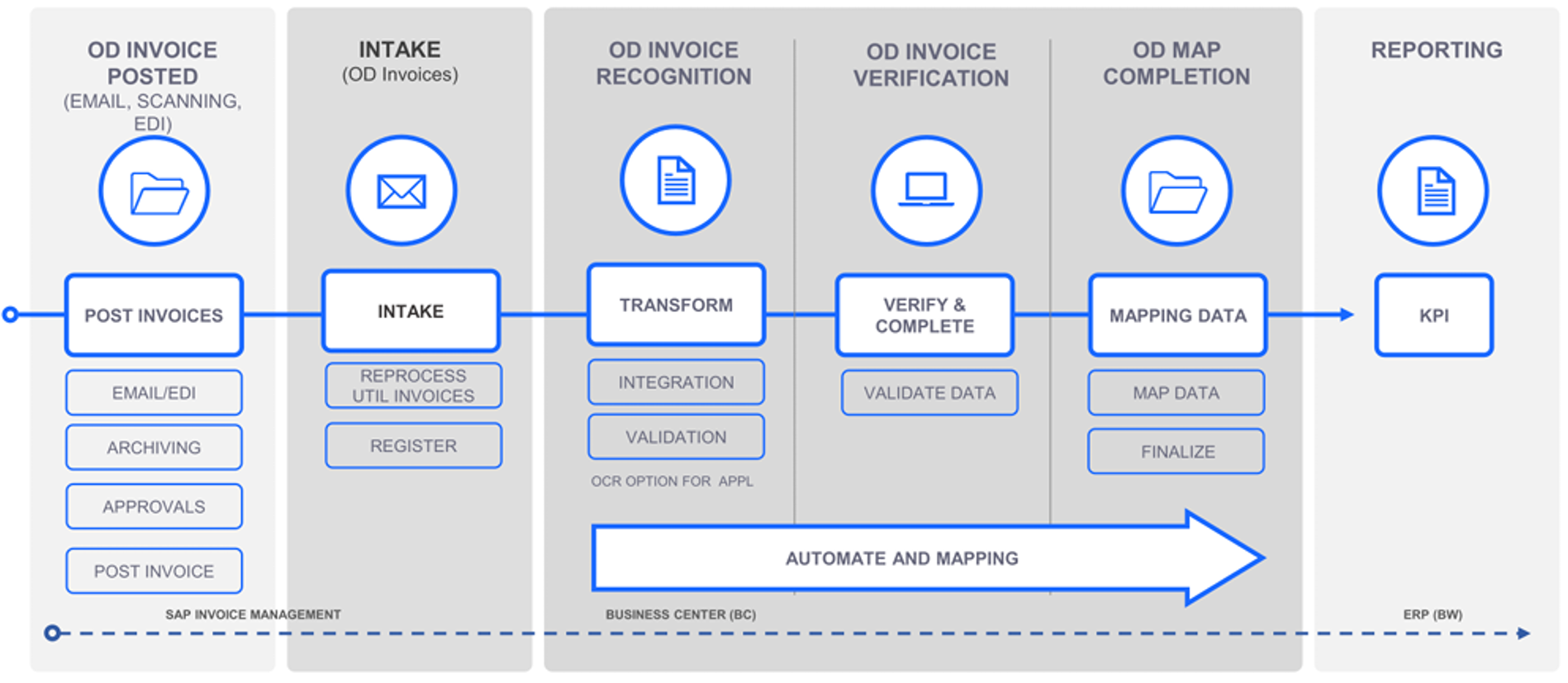
Figure 4: Steps in the ESG Data Processing Workflow
A real-world example from a large technology company demonstrated how Scope 2 emissions data can be automatically extracted from utility bills. In this process, these documents are first processed as regular invoices and then reused to collect ESG-related information.
This approach reduces manual work and speeds up the collection of data for sustainability reports. It demonstrates that organizations do not need to wait for a perfect future model, but can leverage existing VIM functionality to make ESG data available.
4. Premium User Experience: Introduction to VIM OneInvoice
For nearly 15 years, the standard SAP GUI screen for document processing has formed the basis of VIM. Although this interface has functioned reliably for many years, traditional GUI solutions are less well-suited to modern requirements regarding user experience, extensibility, and lifecycle management.
To align with the “Fiori First” strategy of modern companies, Jan Spott introduced VIM OneInvoice. This new interface is based on ABAP Cloud, RAP (RESTful Application Programming), and Fiori Elements. It was designed to enable extensions or customizations outside the SAP S/4HANA core system, thereby supporting the Clean Core principles.
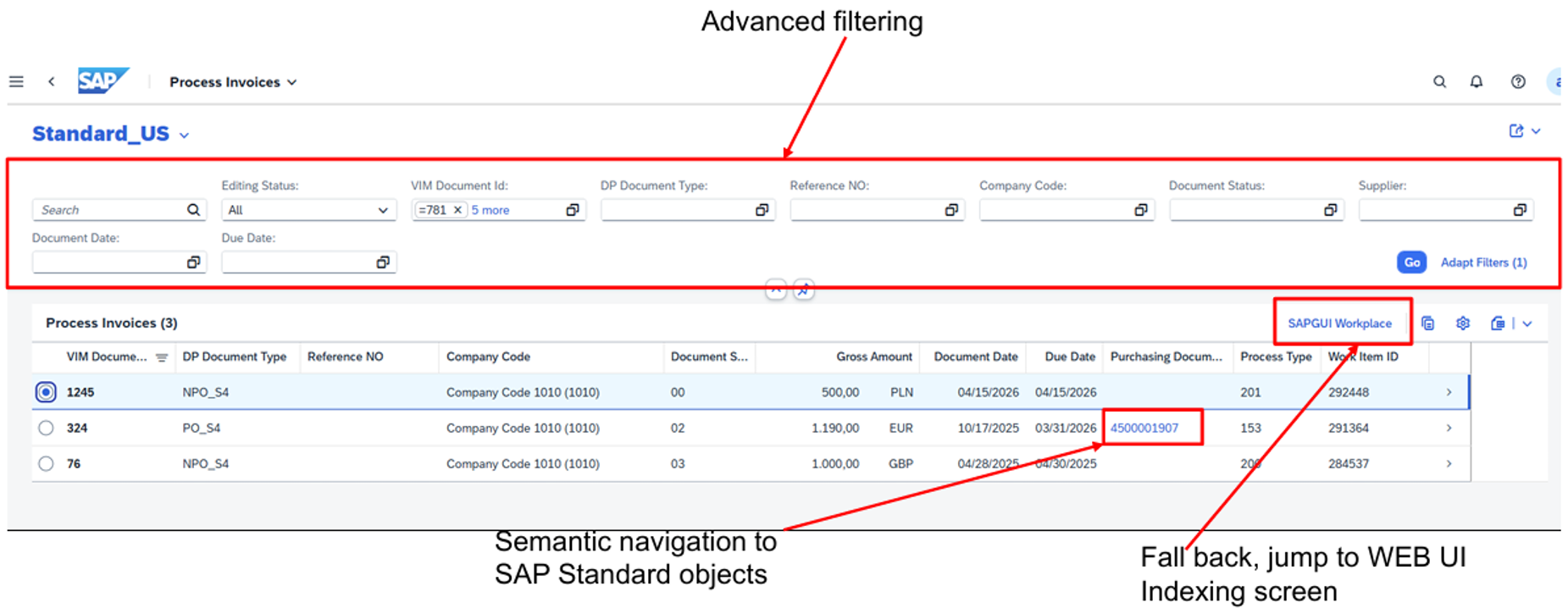
Figure 5: OneInvoice inbox screen
OneInvoice will be rolled out in phases. The initial rollout is scheduled for VIM 25.4 SP2, after which it will become the standard VIM S/4HANA interface starting with VIM 27.4 in 2027.
Among other things, OneInvoice offers:
Advanced filtering options
Integrated display of invoice images
Semantic navigation between OneInvoice and other SAP objects
Easily customize tabs, fields, and action buttons without affecting upgrades.
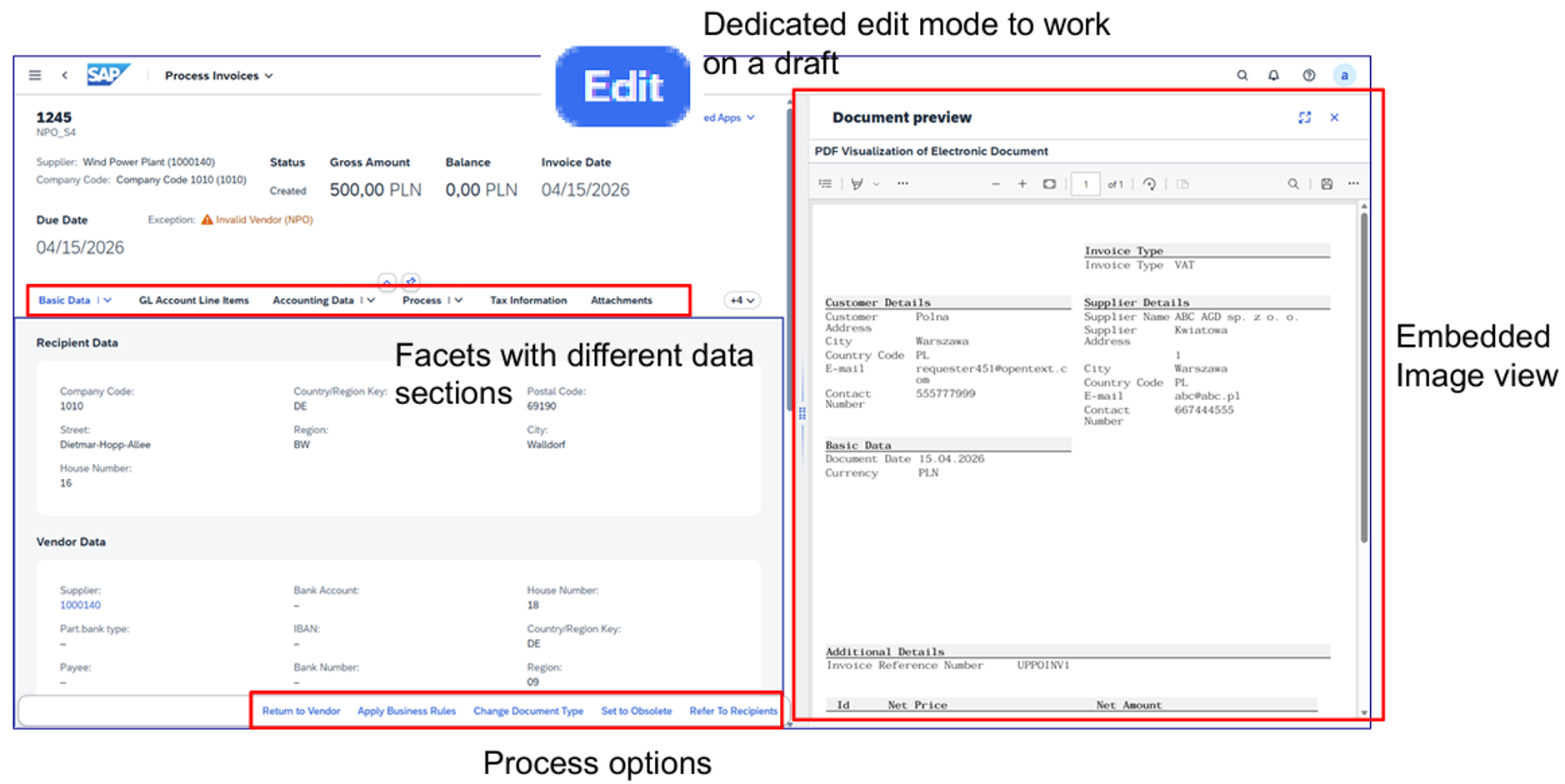
Figure 6: OneInvoice Invoice Screen
5. E-invoices
Ilya Klimau of OpenText R&D discussed the developments in the area of e-invoicing that will be available with version 25.4 SP1. This release introduces a flexible HTML rendering engine with automatic width formatting and accurate mapping. As a result, the original invoice values are preserved exactly as they were submitted in the digital document.
In earlier versions, longer data entries could still be truncated during display, which meant that the e-invoice was not visualized entirely correctly.
Another important development is the automated Paragraph 14 validation for German e-invoices (in support of the XRechnung and ZUGFeRD standards). This process uses the intelligent business rules engine and the KoSIT validator to automatically validate mandatory tax fields in accordance with German regulations. This reduces the need for manual checks and minimizes the risk of unnecessary tax penalties.
In addition, this development aligns with broader global roadmap updates, such as the integration with KSeF in Poland. This enables KSeF numbers to be automatically processed via Document and Reporting Compliance (DRC) in SAP. VIM thus provides further support for compliance automation, syntax validation, and streamlined exception handling within e-invoicing processes.
6. Transportation Management (TM) Invoices
In the presentation titled “SAP VIM TM Integration,” Jan Spott (Product Management VIM Core) explained the ongoing development of the integration between SAP Vendor Invoice Management (VIM) and Transportation Management (TM). This development will result in advanced automation in version 25.4.
While earlier versions focused primarily on basic OCR recognition and manual processing, VIM now integrates by default with the SAP TM workflow for freight settlement and dispute resolution.
Within this integrated framework, VIM records and validates TM-specific fields—such as freight orders, bills of lading, and air waybills—in a special table (/OPT/VIM_TM_ITEM). The TM process is then initiated via a SOAP proxy call.
A key component of this integration is that invoice approval and dispute resolution take place within SAP TM. VIM uses specific business rules to place documents in a pending status until processing within TM is complete. After successful processing, the workflow is automatically completed. If an invoice is rejected, the process is handled further within VIM.
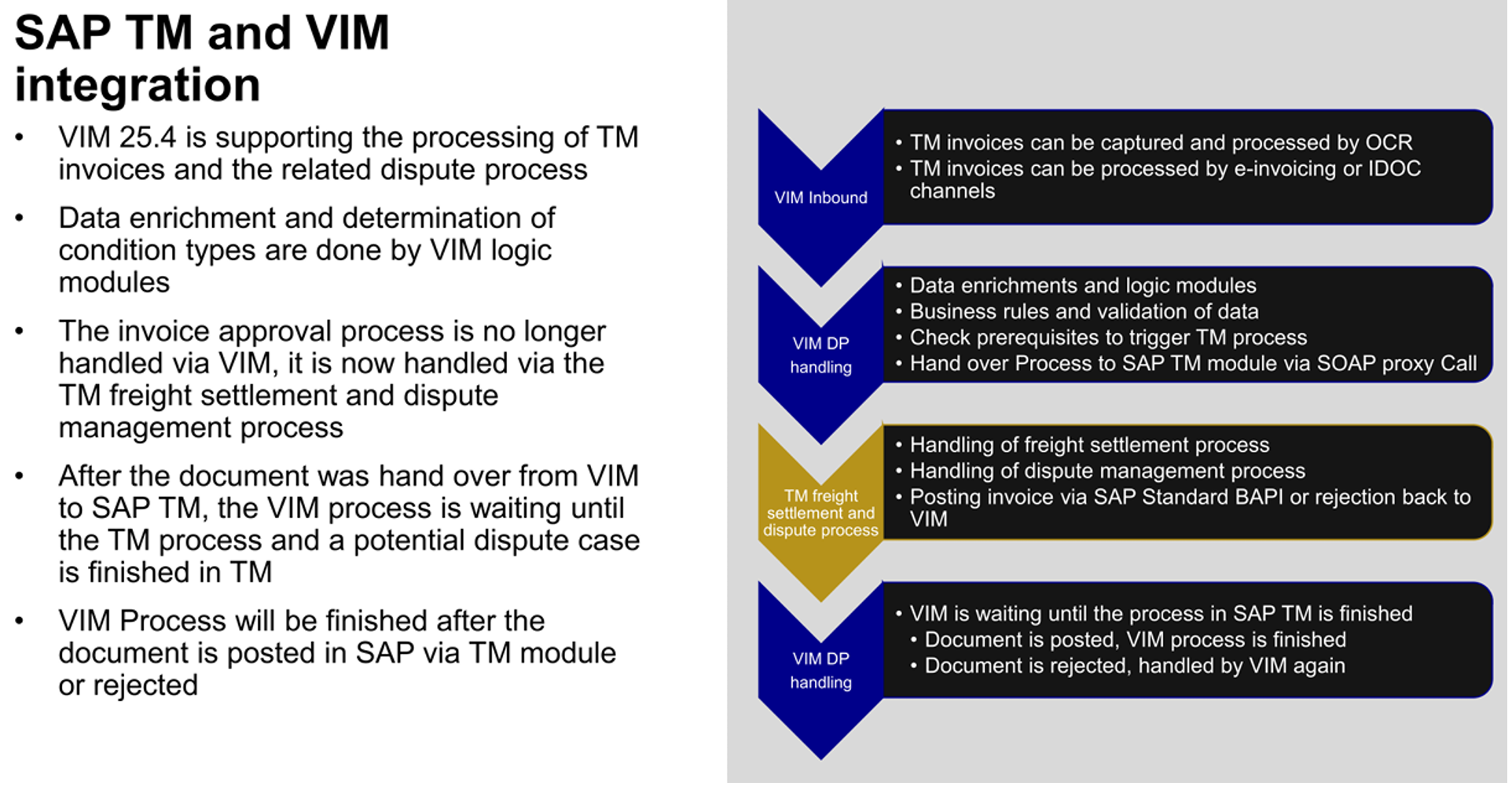
Figure 7: VIM and TM Integration
7. Beyond Invoices
In addition to invoice processing, VIM also offers new capabilities for other document types within SAP. By leveraging the SAP Generative AI Hub and the SAP HANA Cloud vector engine on SAP BTP, the platform features intelligent recognition capabilities. This functionality enables the automatic recognition of payment terms, Incoterms, and complex material descriptions based on master data.
This improves the recognition of document information and further speeds up processing.
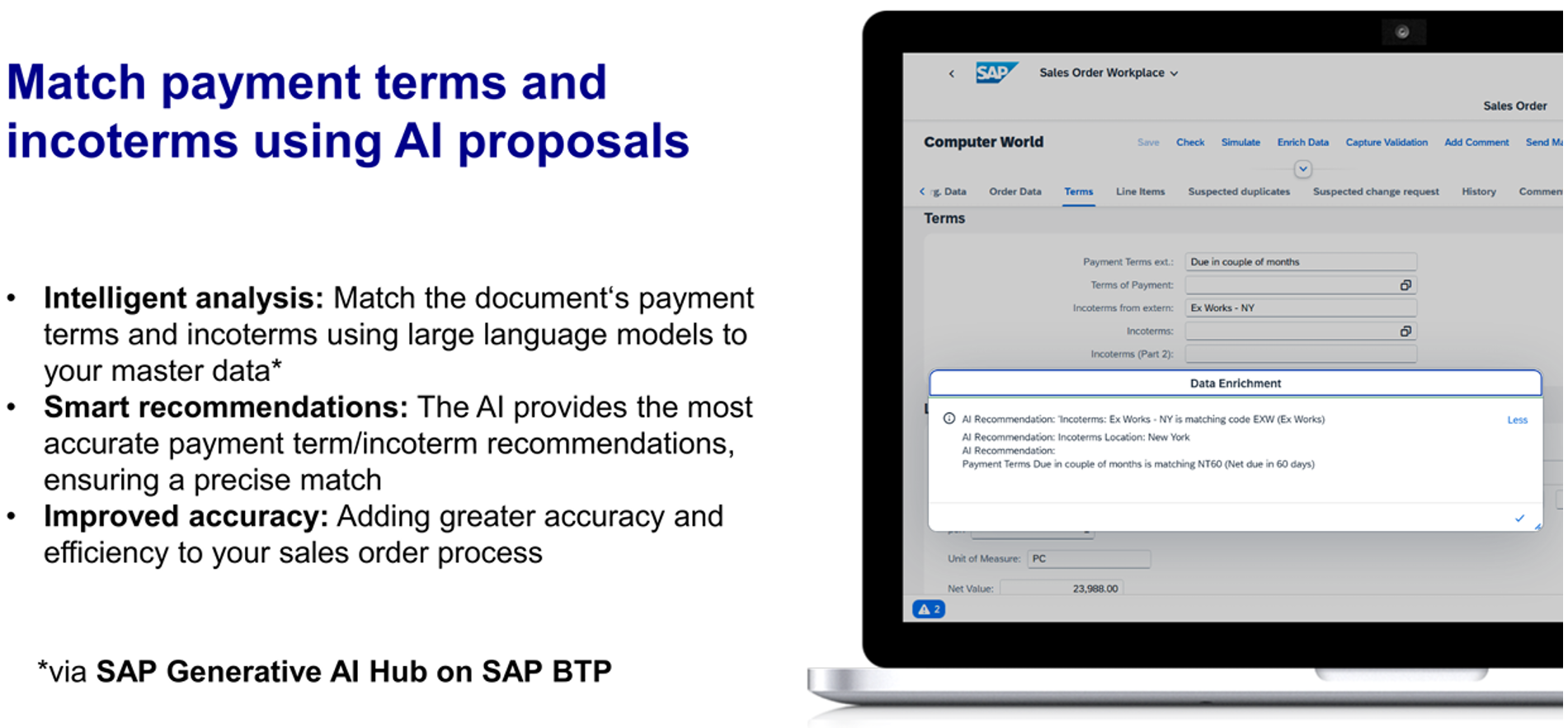
Figure 8: AI Data Proposal
In addition, the integration with OpenText Content Aviator provides an interactive AI assistant within SAP GUI and Fiori. Users can use natural language to summarize, search, and translate content.
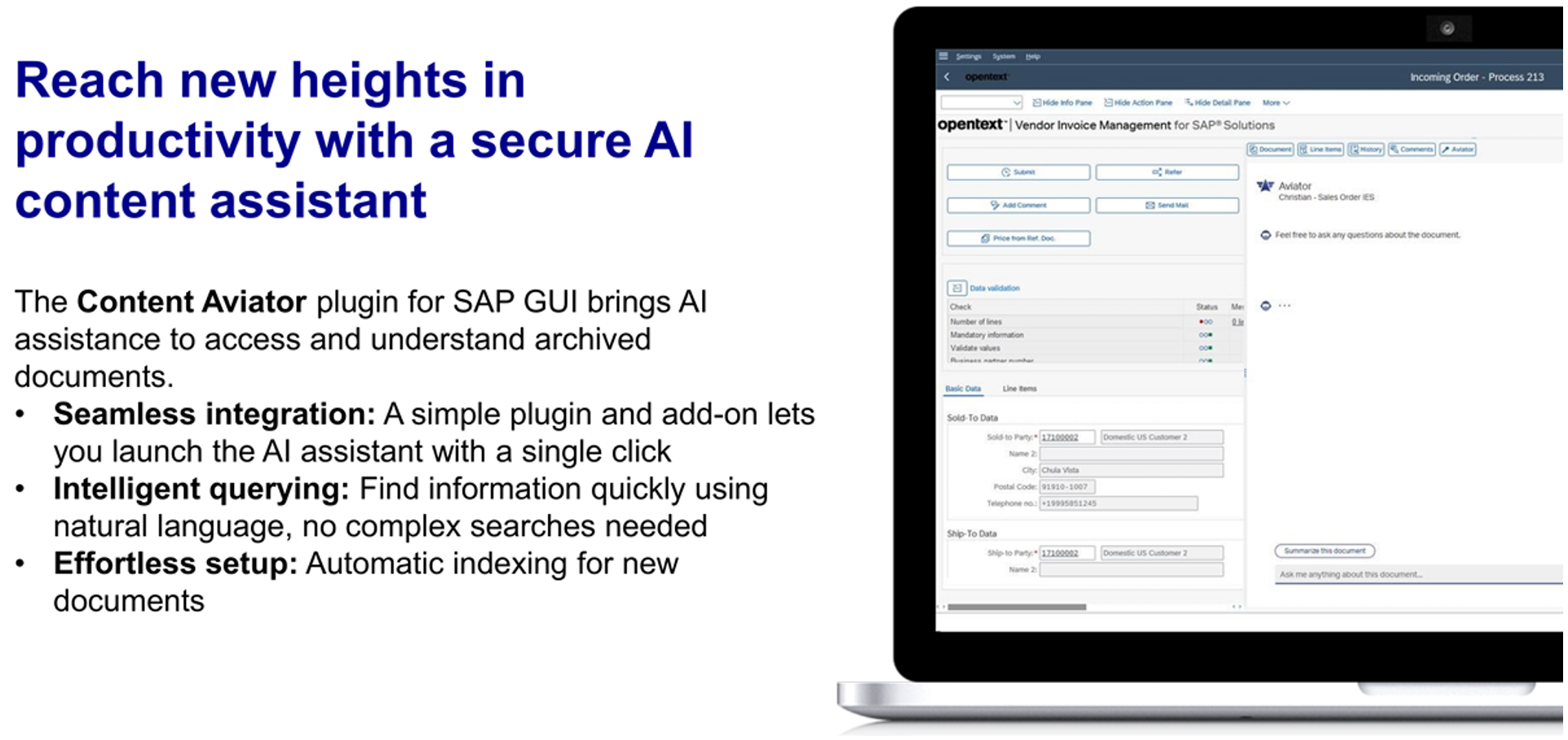
Figure 9: Content Aviator in Action
In addition to supporting internal document processing, generative AI can also be used to draft context-aware emails regarding missing or inconsistent document data. Furthermore, new analytics apps help managers identify bottlenecks in processes such as sales order processing.
Starting in late 2026 and beyond, further automation is on the roadmap, including:
Smart order processing directly from emails.
Prediction of units.
Full support for the upcoming SAP S/4HANA 2027 release.
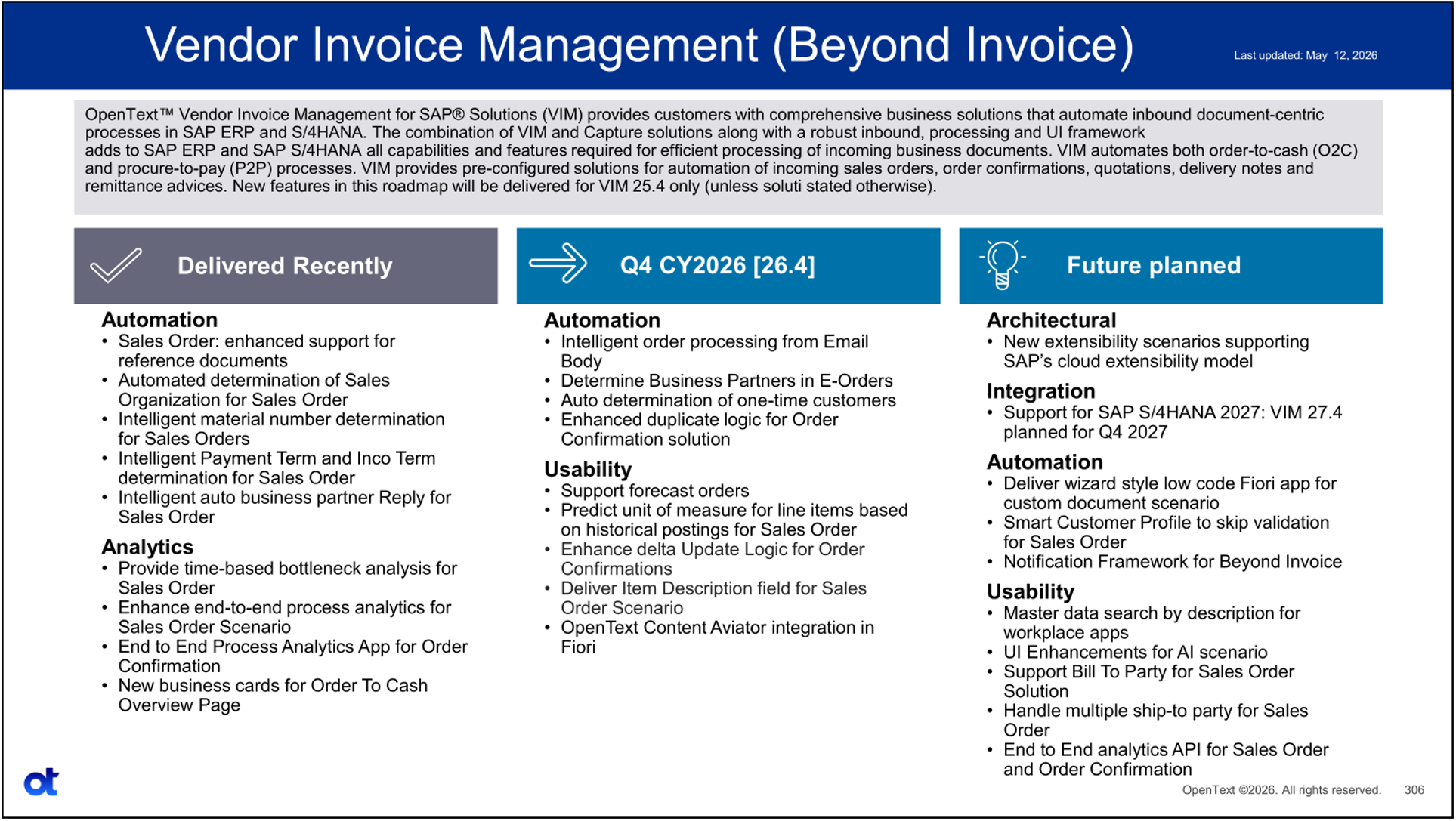
Figure 10: Beyond Invoice Roadmap
Conclusion
The key message of the OpenText VIM Partner Deep Dive 2026 is clear: organizations do not need to postpone their automation goals while waiting for a perfect future model. By taking advantage of the available opportunities now, they can make the most of the four strategic pillars:
Productivity: By directly streamlining processes and eliminating manual tasks, smart organizations maximize the efficiency of their daily processes.
Innovation: The combination of a robust VIM architecture with the emerging capabilities of Agentic AI delivers smart, future-proof automation.
Integration: Seamless integration within the IT landscape prevents friction, enabling companies to adapt more quickly and immediately capitalize on every available efficiency.
Security: Innovative automation goes hand in hand with robust, secure, and compliant software solutions that effectively minimize risks.
The technology needed to achieve these improvements is within reach. Organizations can take concrete steps today toward further automating and optimizing their VIM processes. In doing so, they are not only building greater efficiency and flexibility today, but also laying a future-proof foundation for further innovation.
Learn more
If you have any further questions or would like more information on this topic, or if you have other questions regarding SAP Workflow, Fiori, or SAP Invoice Management (SIM), please contact Martijn Wever.
Related posts